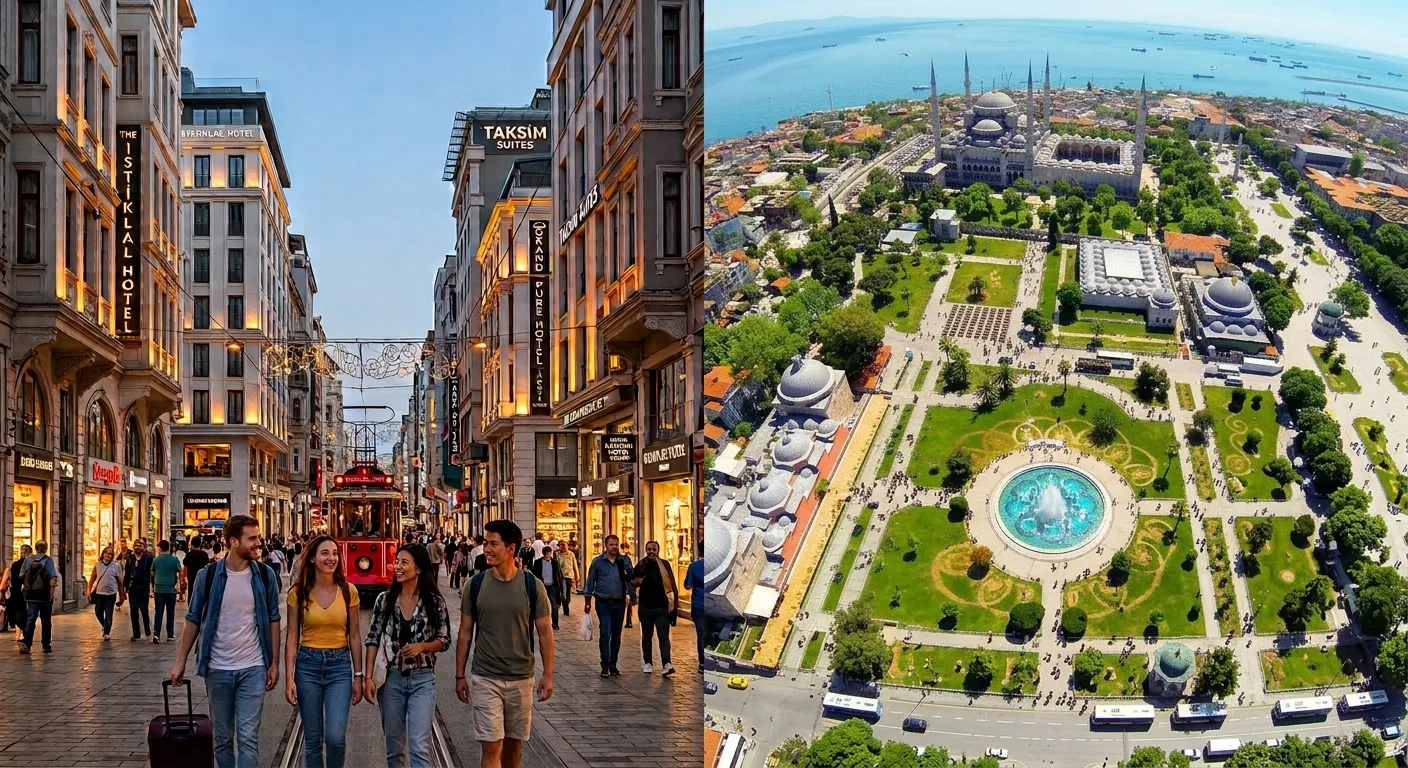
Istanbul has a way of pulling you in from the moment you step off the plane. The question isn’t whether you’ll love it: it’s where you’ll set up base camp. For first-time visitors especially, deciding where to stay in Istanbul often comes down to two neighborhoods: Taksim or Sultanahmet. Each offers a radically different experience of the same city, and picking the wrong one for your travel style can mean spending half your trip on transit instead of sipping çay by the Bosphorus. Istanbul welcomed a staggering number of international visitors in early 2026, with Türkiye recording 9.2 million arrivals in the first quarter alone. That flood of travelers means both neighborhoods fill up fast, and knowing the trade-offs before you book can save you real headaches. Here’s an honest breakdown of what each area actually delivers, and who it’s best for.
Choosing Between Istanbul’s Two Most Popular Neighborhoods
The Taksim vs. Sultanahmet debate isn’t just about geography: it’s about what kind of trip you want. Sultanahmet sits on the historic peninsula, surrounded by Ottoman and Byzantine monuments you’ve seen in every travel documentary. Taksim and the connected Beyoğlu district sit across the Golden Horn, anchored by the buzzing pedestrian artery of Istiklal Avenue. The two areas are roughly 5 kilometers apart, connected by tram, metro, and a short taxi ride.
What separates them goes beyond distance. Sultanahmet feels like walking through a living museum. The pace slows after sundown, restaurants cater heavily to tourists, and the architecture tells stories spanning 1,500 years. Taksim, by contrast, is where Istanbulites actually go out. The restaurants stay open late, the music venues pump until the early hours, and the neighborhood has a cosmopolitan energy that feels distinctly 21st century. Your choice shapes everything from what you eat to how you sleep, so it’s worth getting this right.
Sultanahmet: The Heart of Old City History
Staying in Sultanahmet means waking up within walking distance of some of the most significant historical sites on the planet. The neighborhood occupies the tip of the old city peninsula, and its narrow streets are lined with Ottoman-era guesthouses, rooftop terraces with Sea of Marmara views, and the constant hum of tour groups heading toward the next monument. If your primary goal is to absorb Istanbul’s imperial past, there’s simply no better base.
The trade-off is that Sultanahmet is almost exclusively a tourist zone. The restaurants tend to serve safe, internationalized versions of Turkish food at inflated prices. After about 9 PM, the streets empty out considerably. You won’t find many locals hanging around, and the nightlife options are essentially nonexistent.
Proximity to Major Landmarks and Museums
This is Sultanahmet’s killer advantage. The Hagia Sophia Grand Mosque, the Blue Mosque, Topkapi Palace, and the Basilica Cistern are all within a 10-minute walk of most hotels in the area. The Istanbul Archaeology Museums and the Grand Bazaar sit just slightly farther. For travelers with limited time, being able to roll out of bed and be inside the Hagia Sophia Grand Mosque before the big tour groups arrive is genuinely valuable.
One practical note for 2026: ticket pricing at major landmarks has drawn scrutiny, with reports that visitors are sometimes steered toward higher-priced ticket options at popular sites. Booking skip-the-line museum tickets in advance through platforms like GetYourGuide can help you lock in fair prices and avoid wasted time in queues, especially during peak season from April through October.
Atmosphere and Evening Limitations
Sultanahmet’s charm peaks during the golden hour, when the minarets catch the last light and the call to prayer echoes across the peninsula. It’s genuinely magical. But by 10 PM, you’re looking at closed shops and quiet streets. If you’re a couple seeking a romantic dinner with atmosphere, or a solo traveler hoping to meet people at a bar, you’ll likely need to cross the Golden Horn to Beyoğlu anyway.
The neighborhood also gets overwhelmingly crowded during midday in summer. Cruise tourism has expanded significantly, with Istanbul becoming a key homeport as Türkiye’s cruise traffic grows, and many of those passengers head straight to Sultanahmet for day excursions. If you prefer a quieter experience, plan your sightseeing for early mornings or late afternoons.
Taksim and Beyoğlu: The Modern Pulse of Istanbul
Taksim Square and the surrounding Beyoğlu district represent a completely different side of Istanbul. This is the city’s modern cultural heart, full of art galleries, independent bookshops, rooftop bars, and meyhanes (traditional taverns) tucked down side streets. The vibe here is younger, louder, and more diverse. You’ll hear Turkish pop music spilling out of doorways, smell fresh simit from street vendors, and see locals outnumbering tourists on most blocks.
Staying here means you’re farther from the big-ticket historical sites, but closer to the Istanbul that locals actually live in. For travelers who’ve already visited the Hagia Sophia Grand Mosque on a previous trip, or who prioritize food and nightlife over monuments, Taksim is the obvious pick.
Nightlife, Dining, and Shopping on Istiklal Avenue
Istiklal Avenue is a 1.4-kilometer pedestrian street that runs from Taksim Square down to the historic Galata Tower, and it’s packed from morning until well past midnight. The dining here is leagues ahead of Sultanahmet’s tourist-oriented restaurants. You’ll find everything from upscale Ottoman-inspired tasting menus to tiny lokanta spots serving home-style dishes for under €5.
The shopping ranges from international chains to boutique Turkish designers. Side streets like Nevizade Sokak are famous for their meyhane culture: long, loud dinners with meze, rakı, and live fasıl music. This is where you’ll actually feel the pulse of the city. Note that Istiklal Avenue occasionally sees temporary closures for events and infrastructure work, so check local news before your visit if you’re planning to be in the area on a specific date.
Transportation Links to the Rest of the City
Taksim wins on connectivity. The Taksim metro station connects to the M2 line, which links to Marmaray (the undersea rail tunnel to the Asian side) and the expanding metro network. Istanbul’s public transit system, including the metro, tram, ferry, and İstanbulkart, makes getting around from Taksim straightforward and affordable. A single İstanbulkart tap costs a fraction of what you’d spend on a taxi.
From Taksim, you can reach Sultanahmet in about 25 minutes via the funicular to Kabataş, then the T1 tram to Sultanahmet. The Kadıköy ferry terminal on the Asian side is roughly 40 minutes away by metro and ferry. If your itinerary includes neighborhoods beyond the tourist core, like Karaköy, Balat, or Üsküdar, Taksim’s transport links give you more flexibility.
Accommodation Comparison: Boutique Charm vs. Modern Luxury
The hotel landscape differs sharply between the two neighborhoods. Sultanahmet specializes in boutique guesthouses and converted Ottoman mansions, many with rooftop terraces overlooking the sea. Rooms tend to be smaller and more characterful, with prices ranging from €60 to €200 per night for well-reviewed properties. The experience feels intimate, almost like staying in someone’s beautifully restored home.
Taksim and Beyoğlu offer a wider spectrum. You’ll find international five-star chains with full-service spas, trendy design hotels, and a booming short-term rental market. Istanbul’s Airbnb market has grown substantially, giving travelers more options for apartment-style stays, especially useful for families or longer visits. Prices in Taksim range from €50 for a clean budget hotel to €400-plus for luxury properties with Bosphorus views. If you’re booking through platforms like Expedia, filtering by neighborhood and checking real-time availability is the fastest way to compare options across both areas.
Practical Considerations for Your Trip
Beyond atmosphere and attractions, some unglamorous practical details can make or break your stay. Istanbul is a physically demanding city to walk, and the two neighborhoods present very different challenges.
Walking Conditions and Topography
Sultanahmet is relatively flat, which makes it forgiving for travelers with mobility concerns or families with strollers. The main attractions cluster together, and you can cover the core sights without ever needing transit. The cobblestone streets are charming but uneven in spots, so sturdy shoes are a must.
Taksim and Beyoğlu, on the other hand, are built on steep hills. Walking from Istiklal Avenue down to Karaköy involves a significant descent, and coming back up can be exhausting in summer heat. The historic Tünel funicular helps, but expect your legs to feel it after a full day. If you have knee issues or are traveling with elderly family members, factor this into your decision.
Budgeting for Food and Lodging
Sultanahmet’s tourist-zone pricing means you’ll typically pay 30-50% more for a comparable meal than you would in Beyoğlu’s side streets. A basic kebab plate near the Blue Mosque might run €12-15, while the same dish in a Taksim lokanta costs €6-8. Hotel prices are roughly comparable between the two areas at the mid-range level, but Taksim offers more budget options and more luxury options, giving you a wider price spectrum.
Türkiye’s tourism sector has shown strong growth throughout early 2026, and demand has pushed prices up across both neighborhoods compared to 2024. Booking at least 4-6 weeks in advance is wise for peak-season travel between May and September. We help independent travelers plan their perfect Istanbul itinerary with handpicked, local recommendations, and early planning consistently makes the biggest difference in both price and availability.
Final Verdict: Which Area Suits Your Travel Style?
The honest answer is that neither neighborhood is objectively better: it depends entirely on what you want from your trip. Choose Sultanahmet if your primary motivation is historical immersion, if you have limited mobility, or if you’re visiting Istanbul for the first time with only 2-3 days and want to maximize sightseeing efficiency. Choose Taksim if you care about food culture, nightlife, and experiencing Istanbul as a living city rather than an open-air museum.
For trips of five days or more, consider splitting your stay between both. Two nights in Sultanahmet to cover the monuments, then move to Taksim for the rest of your trip. This gives you the best of both worlds without excessive commuting.
Whatever you decide, don’t leave your key experiences to chance. Skip the long queues at Istanbul’s busiest attractions and get straight to the good stuff: book top Istanbul tours and Bosphorus cruises in advance to lock in your spot and free up your schedule for the spontaneous discoveries that make this city unforgettable.
Check Out: Istanbul Best of the City – 1, 2, or 3-Day Private Guided Tour
Secure your spot on the Bosphorus Sunset Luxury Yacht Cruise here before it sells out!
Next Steps for Your Trip:
Check out our related guides:
MUST-TRY TOURS AND ACTIVITIES IN ISTANBUL
Powered by GetYourGuide


