Ottoman Neighborhood Culture And Social Etiquette
Long before modern urban planning, the social fabric of the Ottoman Empire was woven through quiet acts of kindness, deep respect, and poetic symbolism. When exploring Ottoman Neighborhood Culture And Social Etiquette, travelers discover a society where unspoken gestures governed daily life. From colored flowers placed carefully on wooden windowsills to distinct double door knockers, Ottoman street life operated on profound empathy, community solidarity, and subtle social graces.
Direct Answer: Ottoman Neighborhood Culture And Social Etiquette represents a traditional social system built around the “Mahalle” (neighborhood) where community support, privacy, and hospitality were expressed through subtle non-verbal symbols. Famous examples include placing yellow flowers in windows to request quiet for a sick resident, using dual-tone door knockers to signal male or female guests, and leaving anonymous alms on charity stones (Sadaka Taşları).
The Secret Language Of Window Flowers And Door Knockers
One of the most poetic aspects of Ottoman Neighborhood Culture And Social Etiquette is how households communicated their needs to passersby without speaking a single word.
Subtle Symbols in Ottoman Architecture:
-
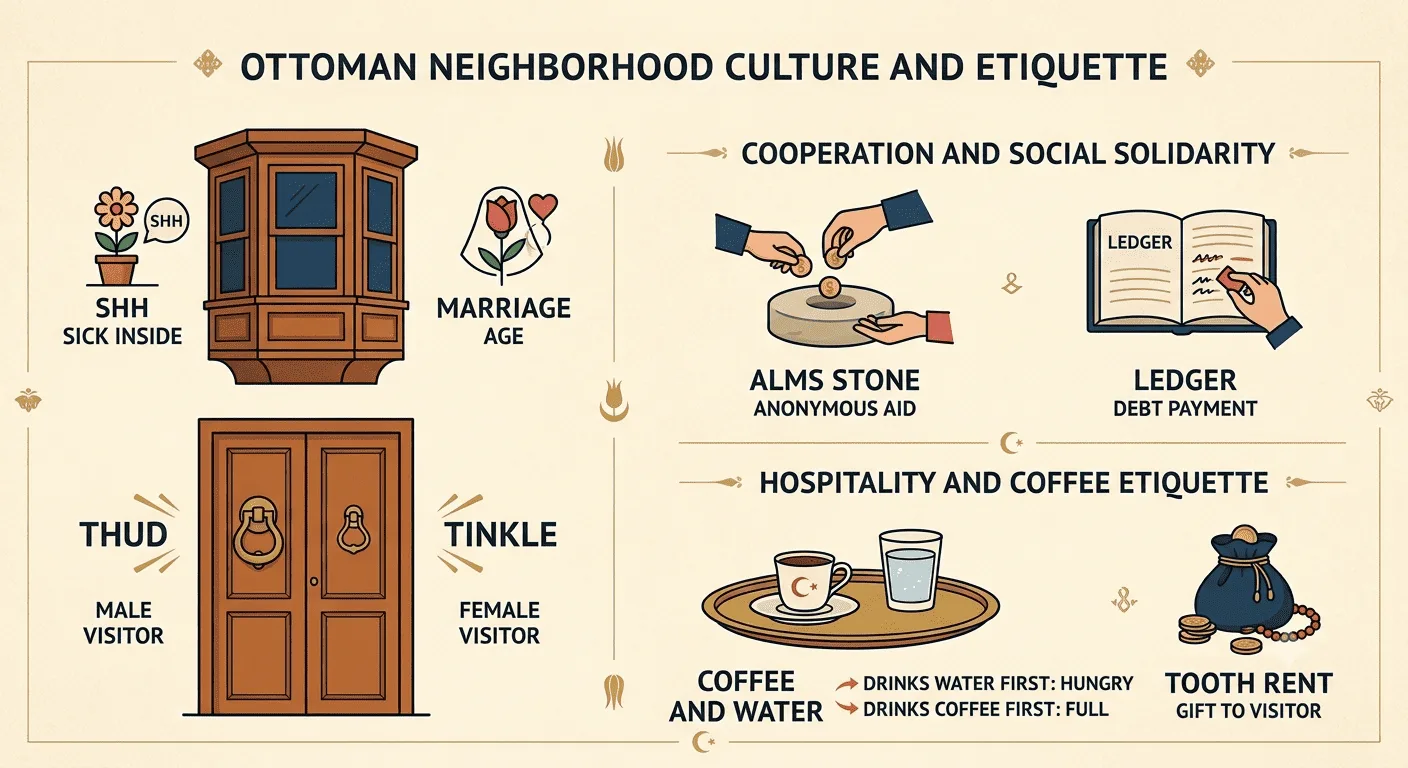
Yellow Flowers in Windows: A yellow flower placed on a windowsill signaled to the entire neighborhood that someone inside was ill. Peddlers, children, and street vendors would pass silently or lower their voices out of respect for the sick neighbor.
-
Red Flowers in Windows: A red flower indicated that a young maiden of marriageable age lived in the house. In response, neighborhood youths and passersby would refrain from coarse language or loud behavior while walking down that street.
-
Dual-Sound Door Knockers: Traditional Ottoman front doors featured two distinct bronze knockers—a large, heavy iron knocker and a small, delicate brass one. The large knocker produced a deep tone signaling a male visitor, prompting the master of the house to answer. The smaller knocker produced a soft chime signaling a female visitor, allowing the mistress of the house to open the door comfortably.
Anonymous Charity: Sadaka Taşları And Zimem Defteri
Social equality and dignity were core values embedded within Ottoman Neighborhood Culture And Social Etiquette. Philanthropy was designed so that the giver never knew the receiver, preventing shame or indebtedness.
Inspirational Charity Traditions:
-
Sadaka Taşları (Charity Stones): Cylindrical stone pillars placed near mosque courtyards or quiet street corners with a small hollow top. Wealthy residents discreetly dropped silver coins into the hollow at night. Those in financial need would take only the exact amount required for their daily bread, leaving the rest for others.
-
Zimem Defteri (Paying Debt Ledgers): During holy periods like Ramadan, wealthy citizens would walk into random local groceries, bakeries, or pharmacies in modest neighborhoods. They would ask to see the debt record book (Zimem Defteri), randomly choose pages of struggling residents, and pay off their debts completely without ever learning their names.
The Etiquette Of Ottoman Hospitality And Coffee
In traditional Ottoman homes, hosting guests was treated as a sacred duty. The delicate etiquette surrounding coffee service illustrates the thoughtful psychology of Ottoman entertaining.
Graceful Culinary Traditions:
-
Water Served with Coffee: When a guest was welcomed, a cup of strong Turkish coffee was served alongside a glass of cold water. If the guest drank the water first, it subtly signaled they were hungry, prompting the host to prepare a meal. If they sipped the coffee first, it meant they were full and simply enjoyed the conversation.
-
Diş Kirası (Tooth Rent): During Ramadan dinner gatherings, house hosts gave guests small velvet pouches filled with silver coins, amber beads, or silk handkerchiefs upon leaving. This gift was called “Diş Kirası”—a gesture thanking guests for spending their time and using their teeth to consume the host’s meal.
The Mahalle System: Community Solidarity And Trust
The neighborhood (Mahalle) served as the primary social and administrative building block across Ottoman towns and cities.
Key Social Rules:
-
The Role of the Neighborhood Imam and Mukhtar: Local spiritual leaders and neighborhood elders acted as social mediators, resolving family disputes, distributing welfare to widows, and maintaining neighborhood safety.
-
Open Door Policy: Front doors were often left unlocked during daytime hours, reflecting deep mutual trust among neighbors who looked after each other’s children and shared homemade meals.
Frequently Asked Questions
What does a yellow flower in a window mean in Ottoman history? A yellow flower placed on a windowsill meant someone inside the house was sick, signaling to street vendors and neighbors to keep noise levels down.
How did Ottoman door knockers distinguish visitors? Ottoman doors featured a large, heavy knocker for male visitors (producing a deep sound) and a smaller, lighter knocker for female visitors (producing a soft ring).
What is Zimem Defteri in Ottoman tradition? Zimem Defteri was the practice of wealthy individuals anonymously paying off the debt logbooks of poor residents at local grocery stores.


