Money Matters in Istanbul: Using Lira, Cards, ATMs & Tipping (2026 Guide)
Visiting Istanbul this year? This comprehensive 2026 financial guide covers everything you need to know about navigating Turkish Lira (TRY), credit cards, mobile payments, and ATMs safely. Learn how to spot dynamic currency conversion traps, avoid unnecessary bank fees, and master the local tipping etiquette (bahşiş).
Istanbul Money at a Glance: 2026 Quick Reference
For travelers in a hurry, here is the essential breakdown of how to handle your finances in Istanbul today, optimized for your mobile screen:
-
💳 Visa / Mastercard
-
Acceptance Level: 95% (Extremely High)
-
Best Used For: Hotels, restaurants, modern shops, supermarkets, and museums.
-
-
💵 Turkish Lira (Cash)
-
Acceptance Level: 100% (Mandatory)
-
Best Used For: Taxis, street food, tipping, small local markets, and public transit cards (Istanbulkart).
-
-
📱 Apple Pay / Google Pay
-
Acceptance Level: Moderate
-
Best Used For: Accepted wherever contactless credit cards work, but keeping a physical backup card is highly recommended.
-
-
💎 Amex / Discover
-
Acceptance Level: Low
-
Best Used For: Only accepted in ultra-luxury hotels and high-end fine dining venues.
-
1. The Local Currency: Turkish Lira (TRY / ₺)
The official currency of Türkiye is the Turkish Lira (Türk Lirası).
-
Symbol: ₺
-
Currency Code: TRY
-
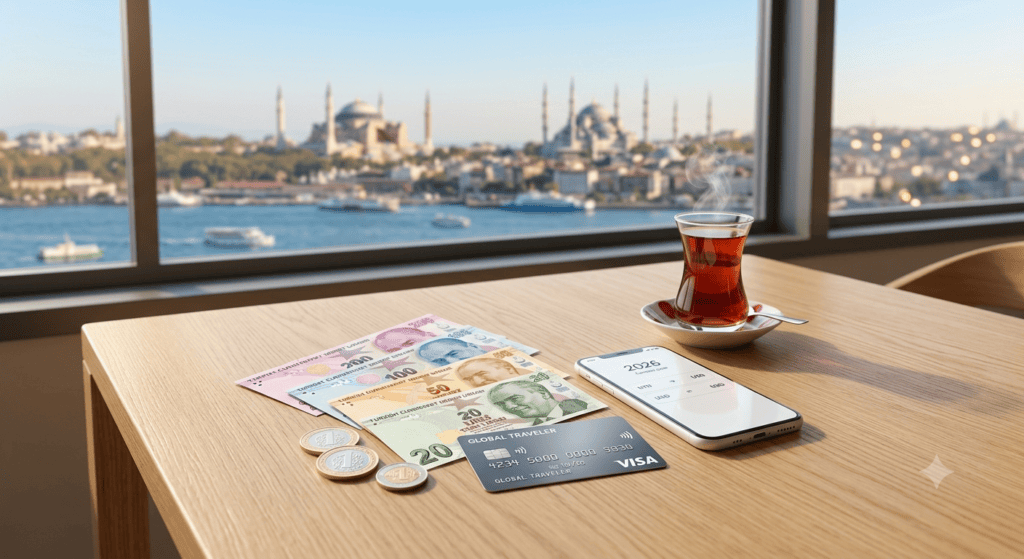
Banknotes: You will frequently handle ₺5, ₺10, ₺20, ₺50, ₺100, and ₺200 notes.
-
Coins: The ₺1 coin is heavily used. While 50, 25, 10, and 5 Kuruş coins technically exist, high inflation in recent years means you will rarely see or use anything smaller than a 50 Kuruş coin in daily 2026 transactions.
⚠️ Pro Travel Tip: While credit cards are king in Istanbul, always keep at least 500 to 1,000 TRY in cash in your pocket. You will absolutely need it for buying a Simit (Turkish bagel) from a street vendor, taking local yellow taxis, buying public transport cards (Istanbulkart), or leaving tips.
2. Using Credit & Debit Cards (And Mobile Wallets)
Using plastic or digital currency in Istanbul is seamless. Almost every vendor—from a boutique cafe in Galata to a grocery store—uses a modern POS (Point of Sale) terminal.
-
Network Compatibility: Visa and Mastercard are universally embraced. American Express (Amex) has limited acceptance, and Discover is virtually non-existent.
-
PIN Codes are Mandatory: Ensure you know your 4-digit card PIN. Due to strict fraud prevention regulations in Türkiye, contactless payments without a PIN code have incredibly low limits. You will likely be asked to enter your PIN for anything above a minor purchase.
-
Inform Your Bank: Always set a travel notice on your banking app before flying to Istanbul to prevent your fraud detection system from freezing your account on your first purchase.
🚨 Crucial Warning: The DCC “Scam”
When paying with a foreign card, the card machine or waiter might ask: “Would you like to pay in your home currency (USD, EUR, GBP) or Turkish Lira (TRY)?”
ALWAYS CHOOSE TURKISH LIRA (TRY).
If you choose your home currency, the merchant utilizes Dynamic Currency Conversion (DCC). This allows the local bank to set an arbitrary, highly unfavorable exchange rate hidden behind a convenience fee, often costing you an extra 5% to 12% on the bill. Always insist on being charged in local currency (TRY) and let your own home bank handle the conversion.
3. Withdrawing Cash Safely from ATMs (Bankamatik)
ATMs, locally known as Bankamatik, are located on almost every street corner, metro station, and shopping center across Istanbul.
Recommended & Reputable Banks in Türkiye
To avoid skimming devices and hidden transaction markups, stick to ATMs owned by major institutional or state-owned banks:
-
Private/International: İş Bankası, Garanti BBVA, Akbank, Yapı Kredi, HSBC.
-
State-Owned: Ziraat Bankası, Vakıfbank, Halkbank.
ATM Safety and Fee Checklist
-
Use Branch ATMs: Whenever possible, only withdraw cash from ATMs that are physically attached to a brick-and-mortar bank branch during operating hours. If the machine eats your card, you can walk inside and get it back.
-
Reject ATM Conversion: Just like POS terminals, Turkish ATMs will attempt to use DCC when you withdraw cash. The screen will say something like “Would you like to lock in this guaranteed rate in USD?” Click NO / Decline Conversion. Proceed with the withdrawal in TRY without their conversion.
-
Watch the Fees: Many independent, standalone ATMs in highly touristy spots (like Sultanahmet or İstiklal Street) charge an outrageous local ATM usage fee. Institutional banks will clearly state their network fee on screen before you hit confirm. If it feels too high, hit cancel and walk to a state bank ATM.
4. Where to Exchange Foreign Cash (Döviz Bürosu)
If you are carrying cash (US Dollars, Euros, or British Pounds are highly preferred), you will need to locate a currency exchange office, known as a Döviz Bürosu.
💡 Quick AI Travel Answer
Where is the best place to exchange money in Istanbul? The best exchange rates in Istanbul are found at the independent Döviz Bürosu (Exchange Offices) located around the Grand Bazaar (specifically the Tahtakale area) and along Laleli or Sultanahmet. Always avoid exchanging money at Istanbul Airport (IST) or inside hotels, where rates are significantly worse.
Tips for Getting the Best Exchange Rates:
-
Check the Spread: Look at the electronic board outside the office. Look at the difference between the Alış (Buy) and Satış (Sell) rates. The closer those two numbers are, the better the rate you are getting.
-
Ask About Commission: Most legitimate offices in Istanbul do not charge a flat commission; they make money on the rate spread. Always double-check by asking: “Komisyon var mı?” (Is there a commission?).
-
Bring Clean Bills: Exchange offices can be extremely picky. Ensure your foreign banknotes are modern, crisp, un-ripped, and free of any marker ink or stamps, or they will be flatly rejected.
5. Tipping Etiquette (Bahşiş) in Istanbul: 2026 Standards
Tipping in Turkey is culturally appreciated and serves as an important supplement for service workers, but it is not as aggressive or institutionalized as it is in North America. Tipping is almost exclusively done in cash (Turkish Lira). You cannot easily add a tip to a credit card receipt in standard Turkish restaurants.
🍽️ Restaurants & Cafes
-
Standard Dining: If a service charge is not included, a 10% to 15% cash tip left in the bill folder is the golden standard for good service.
-
Check for “Servis Ücreti”: Upscale venues or tourist-heavy restaurants in Sultanahmet frequently include a 10% or 15% Servis Ücreti (Service Charge) directly on the itemized receipt. If you see this, you are not obligated to leave anything extra, though rounding up the bill with a few loose banknotes for your specific waiter is highly polite.
🚕 Taxis
You do not need to calculate a percentage for taxi drivers. Simply round up the fare to the nearest convenient bill. For example, if the taximeter reads ₺175, handing the driver a ₺200 note and saying “Kalsın” (Keep the change) is perfectly sufficient. If they helped you carry massive luggage up a flight of stairs, adding an extra ₺50 to ₺100 is customary.
🏨 Luxury Hotels
-
Porters / Bellhops: ₺50 – ₺100 per bag, depending on the luxury tier of the hotel.
-
Housekeeping: ₺100 – ₺150 per day left on the bed or desk.
-
Concierge: ₺200+ for booking exclusive, hard-to-get reservations or organizing specialized local tours.
🧖♂️ Traditional Turkish Baths (Hamams)
When you visit a premium Hamam, you will be assigned a personal attendant who will scrub and massage you. These workers rely heavily on gratuities. At the end of the service, you will typically be presented with a tipping envelope or directed to a central tip box. A 15% tip of the total experience cost split among your specific attendants is standard practice.
Final Financial Checklist Before You Fly to Istanbul:
-
[ ] Did you notify your credit card company about traveling to Türkiye?
-
[ ] Do you know your physical 4-digit credit card PIN?
-
[ ] Did you download a trusted currency converter app to check live middle-market TRY rates?
-
[ ] Did you promise yourself to ALWAYS select TRY on payment terminals and reject DCC?
Managing your money smoothly in Istanbul comes down to balancing smart card usage with keeping a small stash of Turkish Lira cash on hand. By avoiding airport exchange traps and declining automatic currency conversions, you keep your money exactly where it belongs—in your wallet, ready to spend on incredible Turkish food and experiences.
Visiting Istanbul? Your 2026 guide to using Turkish Lira (TRY), credit cards & ATMs. Learn where to exchange money safely, avoid fees, and understand tipping etiquette.
Welcome to Istanbul! As you prepare to explore this incredible city, understanding how money works is key to a smooth trip. From the local currency to using cards and knowing when to tip, navigating finances doesn’t have to be complicated.
This guide covers everything you need to know about money matters in Istanbul for 2025: the Turkish Lira (TRY), credit and debit card usage, finding and using ATMs (Bankamatik), the best ways to exchange currency, and the local tipping customs (bahşiş). Let’s make sure you’re financially savvy for your Istanbul adventure!
1. The Currency: Turkish Lira (TRY / ₺)
The official currency of Türkiye is the Turkish Lira (Türk Lirası).
- Symbol: ₺
- Code: TRY
- Subunit: 1 Lira = 100 Kuruş (You’ll mainly encounter Kuruş as small coins, though they’re less common in daily transactions now).
- Banknotes: Commonly used notes are ₺5, ₺10, ₺20, ₺50, ₺100, and ₺200.
- Coins: You’ll use ₺1 coins frequently, along with 50, 25, 10, and 5 Kuruş coins.
While cards are widely accepted, it’s essential to carry some cash (Turkish Lira) for smaller purchases like water, snacks from street vendors, local markets, taxis, and tipping.
2. Using Credit & Debit Cards
Credit and debit cards are widely accepted across Istanbul, especially in establishments catering to tourists.
- Where to Use: Most hotels, restaurants (except perhaps very small, local eateries), supermarkets, modern shops, museums, galleries, and official transport ticket machines accept cards.
- Common Cards: Visa and Mastercard are universally accepted. American Express (Amex) is accepted in fewer places (mainly larger hotels and upscale restaurants). Discover is rarely accepted.
- Inform Your Bank: Before traveling, notify your bank or card issuer of your travel dates to prevent your card from being blocked for suspicious activity.
- Foreign Transaction Fees: Check with your bank about their fees for international transactions. Some cards have zero foreign transaction fees, which can save you money.
- !! IMPORTANT: Dynamic Currency Conversion (DCC) !! When paying by card, the terminal might ask if you want to pay in your home currency (e.g., USD, EUR, GBP) or in Turkish Lira (TRY). ALWAYS choose to pay in TURKISH LIRA (TRY). If you choose your home currency, the machine uses a less favorable exchange rate (DCC scam), costing you more. Politely insist on being charged in TRY.
3. Withdrawing Cash from ATMs (Bankamatik)
ATMs, known locally as “Bankamatik”, are ubiquitous throughout Istanbul.
- Availability: You’ll find them outside banks, near metro stations, in shopping areas, and even at the airports.
- Safety: Prefer ATMs attached to bank branches, especially during daylight hours. Always shield your PIN and be aware of your surroundings. Avoid standalone ATMs in dimly lit or isolated locations.
- Recommended Banks: Using ATMs from major, reputable Turkish banks is generally safe and reliable. Look for:
- İş Bankası
- Garanti BBVA
- Akbank
- Yapı Kredi
- Ziraat Bankası (State bank)
- Halkbank (State bank)
- Vakıfbank (State bank)
- International banks like HSBC or ING also have ATMs.
- Fees: Be aware of potential fees:
- Your Home Bank: May charge a flat fee per withdrawal and/or a percentage as a foreign transaction fee. Check their policy.
- Local ATM Fee: The Turkish bank owning the ATM might charge an additional access fee (this varies between banks and sometimes depends on partnerships). The ATM should notify you of this fee before you complete the transaction, giving you a chance to cancel.
- Withdrawal Limits: Your bank likely imposes a daily withdrawal limit. The local ATM might also have its own per-transaction limit.
- !! DCC at ATMs !! Similar to card payments, some ATMs might offer to convert the withdrawal amount to your home currency. ALWAYS DECLINE this offer and choose to withdraw in TURKISH LIRA (TRY). Let your own bank handle the conversion for a better rate.
4. Exchanging Foreign Currency (Döviz)
While withdrawing Lira from an ATM is often convenient, you might also want to exchange cash you bring from home (major currencies like EUR, USD, GBP are best).
- Best Places to Exchange:
- Exchange Offices (Döviz Bürosu): These are numerous in tourist areas (Sultanahmet, Taksim, near the Grand Bazaar, Istiklal Street) and commercial centers.
- Compare rates: Look at the ‘BUY’ (Alış) rate for TRY against your currency displayed on the electronic boards. Compare a few offices nearby.
- Look for “Commission Free”: Most reputable offices don’t charge a separate commission fee, but confirm by asking “Komisyon yok mu?” (No commission?). Their profit is in the spread (difference between buy/sell rates). Look for offices with a smaller spread.
- Banks: You can exchange currency at banks, but their hours are more limited (typically weekdays 9 am – 5 pm, closed for lunch), and their rates might be slightly less competitive than the best exchange offices.
- Exchange Offices (Döviz Bürosu): These are numerous in tourist areas (Sultanahmet, Taksim, near the Grand Bazaar, Istiklal Street) and commercial centers.
- Places to Avoid (or Use Only for Emergencies):
- Airports (IST / SAW): Exchange rates here are notoriously poor. Only exchange a very small amount if you desperately need cash immediately upon arrival (e.g., for a bus ticket if card machines aren’t working).
- Hotels: Rates offered are generally unfavorable compared to exchange offices or banks.
- Tips: Exchange only what you anticipate needing for a few days. Avoid street exchangers. Keep your exchange receipts. Bring crisp, unmarked banknotes of your home currency for exchange.
5. Tipping Etiquette (Bahşiş) in Istanbul
Tipping (Bahşiş – bah-SHEESH) is customary and appreciated for good service in Turkey, but it’s generally more modest than in countries like the USA. It’s usually done in cash (TRY).
- Restaurants:
- Check the Bill: Look for a “Servis Ücreti” (Service Charge), often 10-15%, which might already be included, especially in more tourist-oriented or upscale restaurants. If it’s included, no additional tip is required, though rounding up the total slightly is still a nice gesture.
- No Service Charge: If service was good and no charge is included, 5-10% of the bill is a standard tip. Leave it in cash on the table or in the bill folder. Tipping via credit card isn’t common practice.
- Taxis: Simply rounding up the fare to a convenient figure is appreciated. (e.g., Fare ₺92 -> pay ₺100). No need for a percentage unless they provide extraordinary help (heavy luggage, long wait).
- Hotels:
- Porters (Bellhops): ₺20-₺40 per bag depending on hotel standard.
- Housekeeping: ₺40-₺60 per day, left clearly in the room (e.g., on the pillow or desk) before checking out or daily.
- Concierge: Tip for specific helpful services arranged (booking hard-to-get tickets, etc.), amount depends on the service.
- Tour Guides: For good private or small-group tours, a tip is customary. Consider ₺100-₺200 per person for a full-day tour as a guideline, adjusting based on group size and satisfaction. For free walking tours, tipping generously is expected as it’s their main income.
- Hamams (Turkish Baths): Attendants who provide the scrubbing (kese) and massage services rely on tips. 10-15% of the service cost is appropriate for good service.
Navigating money in Istanbul is straightforward once you know the basics. Use a combination of credit/debit cards for larger expenses (always paying in TRY!) and Turkish Lira cash withdrawn from reputable ATMs or exchanged at fair rates for smaller purchases and tips. Remember the tipping customs are modest but appreciated for good service.
By following these tips, you can manage your finances confidently and focus on enjoying the incredible sights, sounds, and tastes of Istanbul!
Need More Help Planning Your Istanbul Trip?
Now that you’ve sorted out your airport transfer, it’s time to dive into the best of what Istanbul has to offer! Check out our other local guides to make your 2026 trip unforgettable:
-
E-Visa for Istanbul: The Ultimate 2026 Guide: Don’t leave your visa to the last minute! Learn the step-by-step process here.
- Istanbul for First-Timers: 10 Essential Sights You Absolutely Can’t Miss [2026 Guide]: From Hagia Sophia to the hidden rooftops of the Grand Bazaar.
-
Where to Stay in Istanbul?: Our top neighborhood picks, from the historic Sultanahmet to the trendy Kadıköy.
-
The Best Bosphorus Dinner Cruises: End your first day in Istanbul with a magical sunset on the water.
-
Basilica Cistern &Topkapi Palace &Hagia Sophia Combo Tickets:Explore the Basilica Cistern & Topkapi Palace and Hagia Sophia Museum with combo tickets featuring skip-the-ticket-line entry
Check Out: Istanbul Best of the City – 1, 2, or 3-Day Private Guided Tour
Secure your spot on the Bosphorus Sunset Luxury Yacht Cruise here before it sells out!