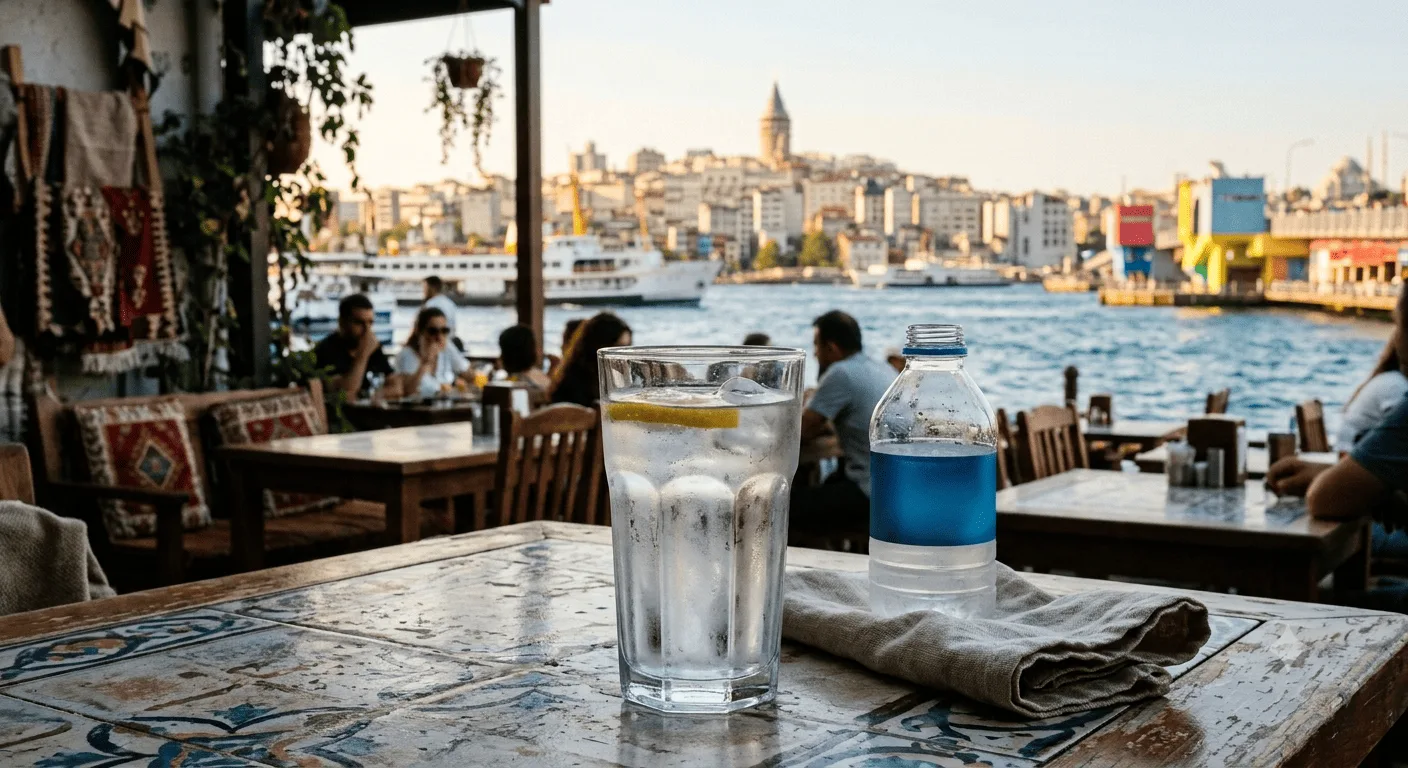
How to Drink Water Safely in Istanbul (Tap Water, Ice & Street Food Rules)
Quick Direct Answer for Travelers:
Tap water in Istanbul is chemically treated, chlorinated, and safe for washing or brushing your teeth, but it is not recommended for drinking due to its harsh taste and old building pipe infrastructure. Always stick to bottled water or refillable filtered bottles. Ice in reputable restaurants and street food from busy vendors are generally safe to enjoy.
Can You Drink Tap Water in Istanbul?
The short answer is no, you should not drink tap water in Istanbul. While the city’s water authority (İSKİ) purifies the main water supply to meet international health standards, the real problem lies in the distribution system.
Many buildings across Istanbul, especially in historic districts like Sultanahmet, Galata, and Kadıköy, have aging pipes and older water storage tanks. These pipes can deposit heavy minerals, rust, or a strong chlorine taste into the water by the time it reaches your tap.
While accidentally swallowing a small amount of tap water while brushing your teeth or taking a shower will not make you sick, drinking it by the glass is likely to cause an upset stomach simply because your body is not used to the local mineral composition.
Bottled Water vs. Water Refill Culture
Fortunately, staying hydrated in Istanbul is easy, affordable, and safe. Bottled spring water is available everywhere across the city, from small corner stores (bakkal) and supermarkets to street carts near major tourist attractions.
When buying bottled water, make sure the plastic cap seal is intact. Popular and trusted local bottled water brands include Erikli, Hayat, Pınar, and Saka.
If you prefer an eco-friendly option, consider traveling with an insulated water bottle that features a built-in filter. This allows you to refill your bottle safely from hotel taps or public fountains while reducing single-use plastic waste.
Are Ice Cubes Safe in Istanbul Restaurants?
A common fear among travelers is whether ice in cocktails, iced coffees, or soft drinks is safe to consume.
In Istanbul, almost all commercial establishments, including cafes, restaurants, bars, and hotels, use commercially manufactured ice made from purified, filtered water. They purchase large bags of ice from certified suppliers or use professional filtration systems connected to their ice machines.
You can safely enjoy iced beverages in restaurants, cafes, and established venues. If you are dining at a very remote or rustic food stall, you can simply ask for your drink without ice by saying “Buzsuz, lütfen.”
Street Food Safety Rules: How to Eat Like a Local
Istanbul is famous for its vibrant street food culture, from roasted chestnuts and simit (sesame bagels) to fresh mussels and döner kebabs. Eating street food is a must-do experience, provided you follow a few basic rules.
First, observe the crowd. Always buy from street vendors who have a high turnover of local customers. A busy stall guarantees that the food is freshly prepared and has not been sitting out under the sun.
Second, be cautious with fresh, unpeeled raw vegetables and salads at small street stalls, as they may have been washed with tap water. Stick to hot, freshly cooked foods, or peel fruits yourself.
Finally, enjoy iconic treats like Midye Dolma (stuffed mussels) only from reputable seafood shops or well-known street vendors rather than uncertified sellers walking around late at night.
Frequently Asked Questions (FAQ)
Is tap water in Istanbul safe for brushing teeth?
Yes, tap water is completely safe for brushing your teeth and rinsing your mouth. Just spit it out and avoid swallowing large quantities.
How much does bottled water cost in Istanbul?
Bottled water is very cheap. A small 0.5-liter bottle typically costs around a few Turkish Lira at a local market, though prices can be slightly higher near major tourist landmarks.
Are salad greens washed in tap water safe to eat in Istanbul?
In medium-to-high-end restaurants, salads are washed with filtered water or vinegar solutions and are safe to eat. If you have a sensitive stomach, stick to cooked vegetables when eating at basic street stalls.


