Istanbul’s Secret Underground: Ancient Cisterns & Hidden Byzantine Crypts
Why Istanbul’s Underground Still Feels Like a Secret (Even in 2026)
Street level Istanbul is loud in the best way. Tram bells, ferry horns, the smell of simit and grilled fish drifting sideways through the air. You can spend a whole week just chasing domes and viewpoints and never run out of city.
And then you step through an unassuming door or down a narrow stairwell and it all changes.
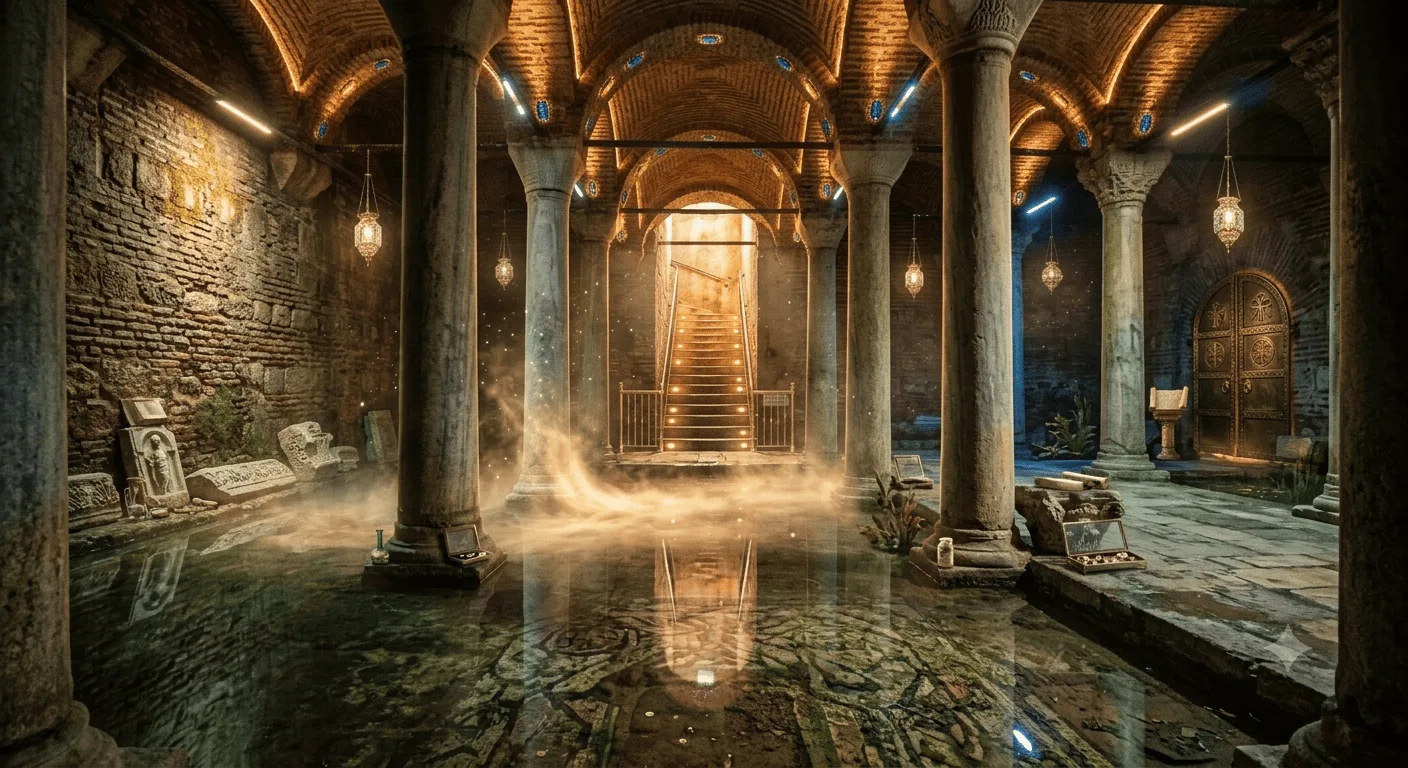
The temperature drops. The sound gets swallowed. The stone looks wet even when it is not. You realize you are standing inside the working leftovers of an empire that had to solve boring problems like water storage, foundations, drainage, and worship in a city that keeps rebuilding itself on top of itself.
This guide is for that quieter world beneath your feet. Not just the Basilica Cistern, which is beautiful, yes, but also crowded, choreographed, and kind of… expected. Here you will find lesser known cisterns, atmospheric reservoirs, substructures, and crypt like Byzantine spaces, plus the weird in between places where ruins survive because a modern basement happened to wrap around them.
If you like history, photography, repeat visits, hidden gems, or you just need a rainy day plan that does not involve another museum queue, you are in the right place.
Before You Go Underground: Safety, Access, and Etiquette (Read This First)
A quick reality check. Some of these places are formal ticketed museums with staff and lighting and signage. Others are semi private, attached to hotels, restaurants, or active religious complexes. A few are more “neighborhood infrastructure that survived” than “tourist site.” That’s part of the charm, but it changes how you plan.
Safety basics that actually matter underground:
- Slippery stone is the main hazard.Moisture lives down there. Wear shoes with grip. Smooth soles are a bad idea.
- Low light and uneven steps.Bring a small flashlight or use your phone light, but keep it subtle and don’t blind people.
- Hands free is better.Crossbody bag, small backpack, nothing swinging into ancient columns.
- Humidity happens.A thin layer you can put on and off is useful, even in summer.
Accessibility notes (be honest with yourself): many cisterns involve narrow staircases, tight turns, damp floors, and dim lighting. If limited mobility is a factor, build your day around ground level Byzantine sites nearby and choose the easiest underground stop (Şerefiye is usually the gentlest experience).
Photo etiquette and tips:
- Your phone can do a lot if you let it. Use Night Mode, brace against a wall, shoot in short bursts.
- Small tripods are sometimes allowed, sometimes not. If it blocks a path or slows the flow, skip it.
- Don’t stage long shoots in narrow corridors. These spaces are not wide.
- Give your eyes a minute to adjust before you decide the lighting is “bad.” It is usually your pupils, not the site.
Timing strategy: early mornings and weekday afternoons tend to be calm. Rainy days are weirdly perfect. People stay above ground, and the underground feels even more cinematic.
Quick Map in Your Head: Where These Hidden Cisterns Cluster
You do not need a complicated map, just a practical mental one.
1) Historic Peninsula (Sultanahmet to Eminönü): the densest cluster for visitor friendly cisterns. Easy tram access, lots of layers under the tourist core.
2) Fatih and Zeyrek: quieter streets, more “lived in” Istanbul, and a stronger sense of the Byzantine layer baked into everyday buildings.
3) Beyoğlu and Galata: fewer big cisterns, but plenty of basement archaeology energy. Buildings here often sit on older foundations and reused stone.
Why clusters exist is simple. Byzantine water infrastructure was extensive, later Ottoman systems reused parts of it, and modern basements were built into whatever was already down there. Istanbul is a palimpsest, but also a practical city. It keeps using its old bones.
Planning tip: group two to three underground stops per day, then pair them with nearby above ground Byzantine landmarks. Your brain needs daylight breaks to process what it is seeing. Also, stairs.
If You Want a Basilica Cistern Alternative (Less Crowd, More Mood)
If you loved the idea of the Basilica Cistern but bounced off the crowds, or you just want something that feels less “set piece,” build your alternative around a simple checklist:
- Quiet enough to hear your own footsteps
- Photogenic without needing a perfect angle
- Clearly historic, not overly rebuilt
- Easy access so you’re not gambling your whole day
Two places hit that sweet spot most reliably.
Binbirdirek Cistern (Philoxenos): The Understated Giant Near Sultanahmet
Binbirdirek is the kind of place that makes you slow down without telling you to. It is large, columned, and surprisingly calm for how close it is to Sultanahmet’s tourist gravity.
What makes it special is the hall feel. Rows of columns receding into shadow. A sense of scale that lands more quietly than the Basilica Cistern’s famous lighting. It often feels more raw, more industrial, like you are visiting infrastructure rather than a scene.
How it differs from Basilica: less theatrical, fewer “look here” moments, more space to wander and notice the engineering. If you like ruins that don’t perform, you will probably prefer it.
Best time to go: earlier hours are usually best. Binbirdirek sometimes hosts events, so access can change day to day. Quick check before you walk over saves frustration.
On site tip: watch for damp patches and uneven surfaces. Also, do not rush photos. Let your eyes adjust for a minute and suddenly your camera will see more too.
Şerefiye (Theodosius) Cistern: Small, Polished, and Surprisingly Elegant
Şerefiye is compact and curated, and that is not a bad thing. It is often the easiest “yes” on a busy day. You can do it without planning your life around it.
The lighting is designed, reflections are part of the point, and the visit is short enough that families and quick itinerary travelers actually enjoy it. It is elegant in a way that feels modern, but the bones are real.
What to look for: column details, the rhythm of arches, and how the sound behaves. Even a whisper seems to travel differently down there.
Value tip: don’t pop up and sprint back into the main tourist loop. Pair it with a slower walk toward lesser known Byzantine fragments in the area. The cistern hits harder when you keep the “old city” mindset for another hour.
Hidden Cisterns Most Visitors Miss (The Real ‘Secret Underground Istanbul’)
These are the stops that rarely make top 10 lists, or they get skipped because they require a little timing, a little local knowledge, or just the willingness to go where Instagram doesn’t lead.
Access can change year to year. Renovations happen. Private spaces get stricter. Treat your plan as flexible and confirm hours or entry requirements the day before.
Nakkash (Nakilbent) Cistern: A Quiet Byzantine Chamber With Minimal Fuss
Nakkash is smaller scale, which is exactly why it works. You get that “how is this here” feeling without the pressure of crowds behind you. It is the kind of place where you can actually study the masonry instead of just photographing it.
How to experience it: go slow. Look at the brickwork and the curves of the arches. Byzantine engineering shows up in patterns. The way bricks are banded, how vaults meet columns, how the space distributes weight. This is the stuff that makes the city feel intelligent, not just old.
Practical tip: treat it as a 20 to 30 minute stop. Don’t force it into a long visit. Then walk the nearby historic streets afterward while your eyes are still tuned to details.
Aetius Cistern (Open Air): Massive Byzantine Infrastructure Without the Underground Crowds
Here is the twist. Aetius is part of the cistern story, but it is open air. No stairwell, no dripping darkness. Still, it is one of the best places to feel the scale of Byzantine planning.
Standing at the edge, you understand ambition. This was a city preparing for droughts, sieges, and population growth. Not romantic reasons. Practical ones.
Why it is worth it: geometry, scale, and that rare sensation of seeing infrastructure as a monumental project.
Best for: walkers, photographers who want wide shots, and travelers tired of ticket lines.
Safety and etiquette: stick to permitted paths and respect local use of the space. These huge old cavities often become neighborhood recreation zones. You are the visitor in someone else’s daily rhythm.
Fildamı Cistern: The Big, Forgotten Reservoir on the Edge of Most Itineraries
Fildamı feels remote compared to Sultanahmet, which is exactly the point. It shows how far the system extended. Thick walls, heavy proportions, a sense of a city stretching outward in layers even then.
You do not come here by accident. You choose it.
What to notice: the muscular feel of the architecture. It is not delicate. It is built to hold pressure, to survive, to be ignored until needed.
Planning tip: combine it with a neighborhood food stop so it feels intentional, not like you took a long ride to stare at walls. The memory improves when you attach it to a meal, a tea break, a street you wandered.
Hidden Byzantine Crypts and Substructures: Where the City Gets Spookily Beautiful
Not haunted. Not gimmicky. Just spaces shaped by faith, water, and the constant collapse and rebuild cycle.
When I say “crypt like,” I mean undercrofts, substructures beneath churches or monastery complexes, dim chambers with Byzantine fabric, and those shadowy in between zones where you can feel older levels under your feet even if you never enter a formal crypt.
Access is the tricky part. Many of these are within active religious sites or restricted areas. Prioritize respectful, legal entry. If a door is closed, it is closed. Istanbul rewards patience more than pushing.
Zeyrek and the Old Monastery Layer: Underground Feeling Byzantium Above Ground
Zeyrek is one of the best areas for “crypt vibe” exploration without needing to physically go underground. The streets are steep, the foundations feel layered, and the monastic history is not abstract. You can sense it in the way buildings sit, tilt, and reuse stone.
What to do here: walk slowly and scan for surviving stonework, thick walls, and fragments integrated into later buildings. Sometimes the most Byzantine thing you see is a chunk of masonry acting as a basement wall for something ordinary.
Explore ethically: don’t enter private courtyards, don’t hop fences for a better angle. Use public paths and viewpoints. If you want the real reward, train your eye to see from the street.
Little Hagia Sophia Area: Side Streets With Subterranean Surprises
This area is close to the tourist core, but once you step off the main streets it quiets down fast. The feeling is less “monument” and more “old neighborhood that happens to sit on an ancient city.”
What to look for: uneven street levels, retaining walls that look older than everything around them, random architectural fragments. Door thresholds that feel too low. Stones that don’t match the building they are in. Clues.
Tactical tip: go early and bring a printed list of pinned spots, or at least screenshots. Signal can be spotty in tight streets and between thick walls, and nothing kills a good wander like standing still arguing with a loading map.
The Cistern Under a Building Experience (Hotels, Restaurants, and Basements)
This is the most delicate category. Modern businesses sometimes preserve cistern sections in basements. Sometimes they highlight them. Sometimes they would rather you not mention it.
How to approach it: call ahead politely. Ask if the cistern area is viewable without dining or booking. Some will say yes, some will say no, some will say “maybe if it’s quiet.”
Red flags: if staff seems uncomfortable, drop it immediately. No photos, no pushing, no bargaining. These are not public museums.
Value tip: if access is granted, keep it short and respectful. And if it feels appropriate, buy something small. A coffee, dessert, whatever. You are being allowed into a space that is part archaeology, part business, part someone’s workday.
While exploring these hidden gems and experiencing the unique blend of history and modernity, it’s essential to remember the potential impact of your visit on local businesses. Being considerate and respectful can go a long way in ensuring a positive experience for both you and the establishment. For instance, when engaging with staff about accessing restricted areas such as cisterns, it’s crucial to approach the situation delicately and respectfully – this could mean the difference between gaining access or being denied outright.
In a broader context, these experiences can serve as a reminder of the diverse range of jobs available within the tourism sector in Istanbul – from hospitality roles in hotels and restaurants to specialized positions in archaeological preservation. If you’re interested in exploring potential career opportunities within this field or understanding more about the various roles involved in such unique experiences, this Reddit thread provides some insightful perspectives from an ex-recruiter who has worked with numerous professionals in this domain.
Make It a 1 Day “Underground Istanbul” Route (Low Effort, High Payoff)
Underground exploring drains you more than you expect. The stairs, the low light, the concentration. Build a day that flows, with recovery breaks.
A good skeleton is: start with one polished cistern, then a bigger quieter one, then finish with a neighborhood walk where the “Byzantine layer” shows up in fragments.
Also schedule tea. Non negotiable.
Route Option A (Historic Peninsula Focus)
Stop 1: Şerefiye Cistern
Easy start, clean visuals, you get your eye tuned to columns and vaults without fighting crowds.
Stop 2: Binbirdirek Cistern
Go for scale, calmer atmosphere, and the more raw “infrastructure” feeling.
Stop 3: Wander toward Little Hagia Sophia backstreets
No strict checklist. Let the neighborhood show you the level changes and fragments. This is where the day starts feeling like your own discovery, not a route you copied.
What to eat nearby: keep it simple and local. A quick soup lunch, a gözleme stop, a fish sandwich near the water, whatever is busy with locals at that hour.
End point: a sunset walk toward the waterline. After hours in dim stone spaces, the light off the sea feels almost exaggerated. It is a perfect contrast.
Route Option B (Fatih and Zeyrek + Big Reservoir Feel)
Start: Zeyrek neighborhood walk
Go early. Quiet streets make the textures louder. Scan corners and basements for older masonry.
Mid: Aetius Cistern (open air)
You get the massive infrastructure moment without more stairs. It resets your brain.
Finish: choose one indoor cistern based on hours and energy
If you still want underground, pick a smaller calm stop like Nakkash, or return toward the peninsula for a more formal site if that’s simpler logistically.
Transport tip: don’t be a hero with hills if you are tired. Use tram or bus to skip the steepest stretches, then walk the interesting parts. Istanbul is not impressed by your step count.
How to Spot Byzantine Ruins Without a Guide (A Simple Field Checklist)
Once you know what to look for, the city starts giving you little gifts.
Your quick checklist:
- Brick banding:alternating layers of brick and stone, often in a very deliberate rhythm.
- Spolia:reused columns or carved blocks showing up where they “shouldn’t” be, like a fancy marble piece inside a plain wall.
- Arched vaults:especially in basements and lower levels. Look for the curve and the thickness.
- Thick retaining walls:walls that feel overbuilt for the building they support.
- Sudden level changes:stairs that drop for no modern reason, streets that feel sunken, entrances that look like they used to be ground level.
The city is a layer cake. Byzantine, then Ottoman, then modern, sometimes all on the same facade. Stand back. Scan corners. Look at street level first. Older masonry often hides in plain sight right where people do not look, at ankle height, behind a parked scooter, under a shop sign.
Photography trick: shoot at a slight angle, not straight on. Angled light, even weak light, reveals brick texture and arch depth better.
Practical Tips That Make Underground Exploring Easier (And More Fun)
What to carry, realistically:
- Small flashlight or phone light
- Water
- Tissues (humidity and damp air do things)
- Power bank (low light photos drain batteries fast)
- Lightweight layer
Best seasons and times: shoulder seasons are comfortable, weekday mornings are quieter, rainy days are more atmospheric. If you want the moody photos, a gray day is your friend.
Ticket and entry strategy: buy on site when possible and avoid peak hours. Always keep one backup stop nearby because closures happen. Renovations happen. Private access changes. Treat it like part of the hunt, not a failure.
Mindset: slow down. These spaces are not about checking boxes. The best moments are when you stop trying to capture the perfect shot and just listen to the way the city sounds when it is filtered through stone.
Where This Story Gets Even Better: Pair Underground Stops With Nearby Byzantine Highlights
Underground sites make more sense when you connect them to the above ground city.
Think in pairings, not lists.
- Cistern (engineering)paired with city walls (defense) gives you a practical picture of survival.
- Cistern (water)paired with church or monastery traces (faith) reminds you how daily life and belief shared the same urban fabric.
- Quiet neighborhood walkspaired with one major landmark keeps the day balanced. One big anchor, then exploration.
Pin two or three nearby highlights, then wander between them. The discovery energy matters more than hitting every point.
Wrap Up: Your 2026 Shortcut to Istanbul’s Quietest, Oldest Rooms
If you want the simplest formula for a great underground day in Istanbul, pick:
- one polished cistern(easy access, strong visuals)
- one raw or quiet cistern(less curated, more personal)
- one Byzantine layer neighborhood walk(Zeyrek or Little Hagia Sophia side streets)
Then slow down enough to let your eyes adjust, literally and mentally. Underground Istanbul does not reward rushing. It rewards listening, waiting for the crowd noise to fade, noticing the brick patterns, the reused stone, the places where the city admits it has been here for a very long time.
And honestly, that is the point. The best underground moments happen when you stop performing a trip and start exploring.
FAQs (Frequently Asked Questions)
Why does Istanbul’s underground feel like a secret even in 2026?
Istanbul’s underground remains a hidden world beneath the bustling city streets, featuring ancient cisterns, reservoirs, and Byzantine structures that preserve the city’s historical layers. These spaces offer a quieter, atmospheric experience contrasting with the lively street level, making them feel like well-kept secrets even today.
What safety precautions should I take when exploring Istanbul’s underground cisterns?
When visiting Istanbul’s underground sites, wear shoes with good grip to avoid slippery stones, bring a small flashlight or use your phone light subtly due to low lighting and uneven steps, carry hands-free bags to navigate narrow spaces safely, and dress in layers to handle humidity in these damp environments.
Which areas in Istanbul have the most clusters of hidden cisterns and underground structures?
The densest clusters of visitor-friendly cisterns are found in the Historic Peninsula (Sultanahmet to Eminönü), followed by quieter neighborhoods like Fatih and Zeyrek that offer a lived-in Byzantine atmosphere, and Beyoğlu and Galata where buildings often incorporate older foundations and archaeological remnants.
How can I plan my visit to explore multiple underground sites effectively?
Plan to visit two to three underground stops per day paired with nearby above-ground Byzantine landmarks. This approach allows for daylight breaks to process the rich history and helps manage physical demands such as stairs. Early mornings, weekday afternoons, and rainy days are ideal for calmer experiences.
Are there less crowded alternatives to the famous Basilica Cistern in Istanbul?
Yes, Binbirdirek Cistern (Philoxenos) near Sultanahmet offers a quieter, more spacious atmosphere compared to the Basilica Cistern. It feels more raw and industrial, emphasizing engineering over theatricality, making it perfect for visitors seeking moodier, less crowded historic water infrastructure.
What photography tips are recommended for capturing Istanbul’s underground spaces?
Use your phone’s Night Mode and brace it against walls for stability during short bursts. Small tripods may be allowed but avoid blocking paths or slowing visitors. Avoid staging long shoots in narrow corridors and allow your eyes time to adjust to dim lighting before judging photo quality.


