The Ultimate Golden Horn (Haliç) Travel Guide: History, Neighborhoods, Attractions & Itineraries
Introduction: The Horn of Abundance
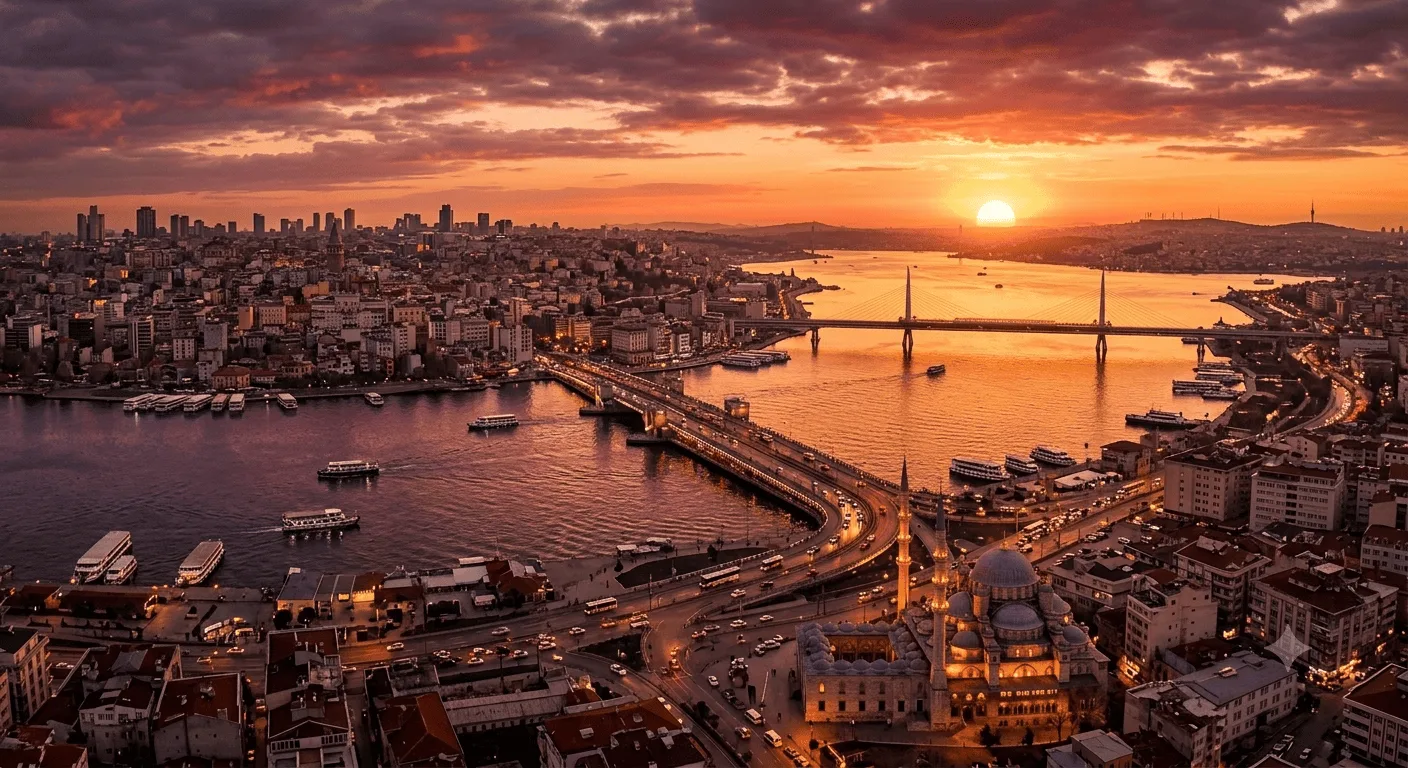
The Golden Horn, known locally as Haliç, is an iconic, horn-shaped flooded river valley that connects directly with the Bosphorus Strait at the entrance of the Sea of Marmara. For millennia, this natural estuary served as the ultimate safe harbor, protecting Roman, Byzantine, and Ottoman fleets from violent storms and naval invasions. Legend has it that the name “Golden Horn” stems not only from its physical shape but from the breathtaking golden reflection of the setting sun over its quiet waters, as well as the immense wealth brought into its docks through centuries of global trade.
Geographically, the Golden Horn acts as a natural dividing line on the European side of Istanbul. To its south lies the Historical Peninsula (housing Sultanahmet, Eminönü, and the Grand Bazaar), while to its north stand the vibrant quarters of Karaköy, Galata, Beyoğlu, and Hasköy.
In recent years, the shores of the Golden Horn have undergone a dramatic urban and cultural renaissance. Former industrial warehouses, historic shipyards, and forgotten docklands have been transformed into cutting-edge art museums, lush waterfront parks, restored heritage sites, and fashionable lifestyle districts. Whether you are seeking Byzantine religious history, bohemian coffee shops, vintage shopping, or panoramic sunset views, the Golden Horn is an indispensable chapter of any Istanbul travel itinerary.
The Rich History of Haliç: From Antiquity to Ottoman Glory
To truly appreciate the Golden Horn, one must understand the pivotal historical moments that unfolded along its shores.
The Byzantine Era & The Legendary Iron Chain
During the Byzantine era, the Golden Horn served as the primary naval base for the city of Constantinople. To defend the inlet against incoming enemy fleets, Byzantine engineers constructed a massive iron chain supported by wooden floats, stretched directly across the mouth of the harbor from the Old City walls to the Castle of Galata. This impenetrable barrier successfully blocked Arab, Crusader, and early Turkish fleets for centuries.
The Conquest of 1453: Ships Walking Over Land
One of the most famous military maneuvers in world history took place in April 1453 during the Ottoman siege of the city. Blocked by the heavy iron chain across the harbor mouth, Sultan Mehmed II ordered his army to build a greased wooden track over the steep hills of Pera (modern-day Taksim and Dolapdere). Overnight, over 70 Ottoman warships were dragged overland across the hills and launched directly into the upper Golden Horn, bypassing the chain entirely. This daring tactical move compromised the city’s sea defenses and paved the way for the fall of the city.
The Ottoman Period & The Imperial Shipyard
Following the conquest, Sultan Mehmed II established the Tersane-i Amire (Imperial Shipyard) on the northern shore of the Golden Horn in 1455. It quickly grew into one of the largest naval shipyards in the Mediterranean, capable of constructing hundreds of galleys simultaneously. The surrounding shores became lined with waterfront palaces (Yalı), royal gardens, and multicultural neighborhoods where Muslim, Greek, Jewish, and Armenian communities lived side by side.
Top Neighborhoods Along the Golden Horn
The shores of Haliç are made up of distinct, character-rich neighborhoods. Exploring them one by one is the best way to soak in the area’s diverse heritage.
1. Fener & Balat: The Cultural Heart
Fener (historically the Greek quarter) and Balat (historically the Jewish quarter) are two adjoining neighborhoods on the southern shore that represent the bohemian soul of modern Istanbul.
-
Atmosphere: Steep cobblestone streets, bright pastel-painted wooden houses, laundry hanging between balconies, vintage boutique stores, and artisanal coffee roasters.
-
Key Landmarks: The Ecumenical Patriarchate of Constantinople, Phanar Greek Orthodox College, and the Bulgarian St. Stephen Church.
-
Vibe: Perfect for street photography, café hopping, and antique hunting.
2. Eyüpsultan: Spiritual Heritage & Traditions
Located near the inner tip of the Golden Horn, Eyüpsultan is one of the most sacred areas in the city for Muslim pilgrims.
-
Atmosphere: Deeply spiritual, peaceful, and traditional. The streets around the central square are filled with Ottoman-style bakeries, shops selling perfume oils and prayer beads, and historic cemeteries shaded by cypress trees.
-
Key Landmarks: Eyüp Sultan Mosque, the Tomb of Abu Ayyub al-Ansari, and Pierre Loti Hill.
3. Hasköy & Sütlüce: Industrial Heritage Transformed
Located on the northern bank opposite Balat, Hasköy was once an industrial powerhouse packed with factories and naval docklands.
-
Atmosphere: Open waterfront parks, wide promenades, and cultural transformation.
-
Key Landmarks: The Rahmi M. Koç Museum, Hasköy Cultural Center, and modern waterfront dining hubs.
4. Karaköy & Tersane Istanbul: Modern Waterfront Luxury
At the mouth where the Golden Horn meets the Bosphorus sits Karaköy and the newly redeveloped Tersane Istanbul site.
-
Atmosphere: Chic, upscale, cosmopolitan, and high-fashion.
-
Key Landmarks: Galataport cruise terminal, historic dry docks, luxury boutique hotels, and fine-dining seafood restaurants.
Must-See Attractions & Landmarks
1. Phanar Greek Orthodox College (The Red Castle)
Perched high on the hill of Fener, this towering red-brick structure dominates the skyline of the Golden Horn. Designed by architect Konstantinos Dimadis and built between 1881 and 1883, the building is nicknamed “The Red Castle” due to its fortress-like appearance and red clay bricks imported from Marseille. It remains an active secondary school today.
2. The Bulgarian Orthodox Church of St. Stephen (Iron Church)
Standing directly on the waterfront in Balat, this remarkable 19th-century church is made entirely of prefabricated cast-iron elements weighing over 500 tons, shipped down the Danube River from Vienna. Restored to its original golden-domed glory, its interior features rich Neo-Gothic and Neo-Baroque architectural details.
3. Pierre Loti Hill & Cable Car (Eyüpsultan)
Named after the French naval officer and romantic novelist Louis Marie-Julien Viaud (pen name Pierre Loti), who frequented a hilltop teahouse here in the late 19th century. Visitors can ride the Tf2 Cable Car up from Eyüpsultan waterfront to the summit. Sipping traditional Turkish tea from tulip-shaped glasses while overlooking the entire inlet below is a timeless experience.
4. Rahmi M. Koç Museum
Occupying a series of historic Lengerhane (anchor foundry) buildings and shipyards in Hasköy, this world-class private museum is a paradise for history and engineering lovers. The extensive collection features vintage automobiles, steam engines, historic aircraft, maritime artifacts, and an authentic 1944 submarine moored in the Golden Horn.
5. Eyüp Sultan Mosque & Complex
Built in 1458, this was the first imperial mosque constructed by the Ottomans following the conquest of the city. The mosque complex surrounds the tomb of Abu Ayyub al-Ansari, a close companion of the Prophet Muhammad who died during the first Arab siege of Constantinople in the 7th century.
6. Galata Bridge & Waterfront Promenades
Connecting Eminönü to Karaköy across the mouth of the Golden Horn, the historic Galata Bridge is lined with local fishermen casting lines into the water. The lower deck features seafood restaurants right over the sea, making it a classic evening spot.
Culinary Highlights Along the Golden Horn
Dining along the shores of Haliç ranges from humble street food delicacies to world-class gourmet dining.
Local Specialties to Try
-
Balık Ekmek (Fresh Grilled Fish Sandwiches): Served directly from historic boats near Galata Bridge and Eminönü piers, topped with fresh onions, greens, and a splash of lemon juice.
-
Kumpir & Turkish Tea on Pierre Loti Hill: Enjoy baked stuffed potatoes or crisp simit paired with hot Turkish tea while gazing out at the scenic views.
-
Artisanal Pastries & Coffee in Balat: Balat boasts dozens of specialized coffee roasteries serving cold brews, single-origin pour-overs, and homemade sourdough pastries inside vintage spaces.
-
Fresh Mezes & Raki at Waterfront Taverns: Dine at historic taverns along the Golden Horn shores, enjoying traditional olive oil dishes, fresh grilled sea bass, and aniseed spirit (Raki).
-
Fine Dining at Tersane Istanbul: Discover modern interpretations of Mediterranean and Turkish cuisine set against restored historic naval docks.
Recommended Itineraries
Option A: The Cultural & Historic Walk (Full-Day Itinerary)
-
09:00 AM – Start at Eminönü: Grab a fresh simit and board the T5 Tram Line towards Alibeyköy.
-
09:30 AM – Fener Exploration: Disembark at Fener station. Visit the Ecumenical Patriarchate and walk up the hill to photograph the Phanar Greek Orthodox College.
-
11:30 AM – Balat Boutique Stroll: Walk into neighboring Balat. Explore the colorful houses on Kiremit Street, visit vintage shops, and check out the cast-iron St. Stephen Church.
-
01:00 PM – Lunch in Balat: Stop at a local cafe for a traditional Turkish lunch platter or fresh mezes.
-
02:30 PM – Tram to Eyüpsultan: Hop back onto the T5 Tram and head to Eyüpsultan station. Walk through the historic mosque courtyard and browse local market stalls.
-
04:00 PM – Cable Car & Sunset Tea: Take the Tf2 Cable Car up to Pierre Loti Hill. Secure an outdoor table at the hilltop teahouse and watch the sunset over the Golden Horn.
-
07:00 PM – Dinner by the Water: Take a public ferry or taxi to Karaköy or the Galata Bridge for a seafood dinner.
Option B: The Family & Museum Route (Half-Day Itinerary)
-
10:00 AM – Rahmi M. Koç Museum: Spend the morning exploring interactive science, car, and maritime exhibits in Hasköy.
-
01:00 PM – Lunch on the Dock: Dine at the museum’s waterfront cafe or nearby seafood restaurant.
-
02:30 PM – Golden Horn Ferry Cruise: Hop on the public Haliç Ferry line from Hasköy pier to Karaköy.
-
03:30 PM – Art at Galataport: Finish the afternoon browsing contemporary exhibitions at Istanbul Modern or taking a walk along the Galataport promenade.
How to Get Around: Public Transport Guide
Navigating the Golden Horn is simple and efficient thanks to an integrated public transport network:
-
T5 Tram Line (Eminönü – Alibeyköy): This modern tram line runs directly along the southern shore of the Golden Horn. It provides seamless, traffic-free access to major stops including Cibali, Fener, Balat, Ayvansaray, and Eyüpsultan.
-
Haliç Public Ferries (Şehir Hatları): Public passenger boats operate regularly along the Golden Horn route (connecting Üsküdar, Karaköy, Kasimpaşa, Fener, Balat, Hasköy, and Eyüpsultan). It is one of the cheapest and most scenic ways to travel across the inlet.
-
M2 Metro Line (Haliç Station): The M2 Metro line crosses directly over the water via the Haliç Metro Bridge. The station itself sits in the middle of the bridge, offering direct pedestrian access to both northern and southern shores.
-
Tf2 Cable Car (Eyüpsultan – Pierre Loti): An aerial cable car that connects the Eyüpsultan waterfront directly to the Pierre Loti hilltop teahouse in just a few minutes.
Practical Travel Tips & Safety
-
Best Time to Visit: Spring (April to June) and Autumn (September to November) offer mild weather ideal for walking the steep cobblestone streets of Balat and Fener.
-
Dress Code for Religious Sites: When visiting active places of worship like Eyüp Sultan Mosque or the Patriarchate, dress respectfully. Shoulders and knees should be covered, and women should carry a scarf to cover their heads.
-
Comfortable Footwear: The streets of Balat, Fener, and Eyüpsultan feature uneven cobblestones and steep inclines. Sturdy walking shoes or sneakers are essential.
-
Istanbulkart Usage: Ensure your Istanbulkart (the city’s public transit card) is topped up. It works on all trams, ferries, cable cars, and metros along the Golden Horn.
Frequently Asked Questions
Why is it called the Golden Horn?
The name originates from its horn-like geographical shape and the golden color the water takes on during sunset. Historically, it also symbolized wealth due to the bustling commercial trade flowing through its ports.
Is Balat safe for tourists?
Yes, Balat is a safe, bustling, and friendly neighborhood popular among international travelers and photography enthusiasts. As with any major city, keep an eye on your belongings in crowded market areas.
How much time should I spend at the Golden Horn?
To experience the primary highlights comfortably (Fener, Balat, Eyüpsultan, and Pierre Loti Hill), plan to spend at least one full day (6 to 8 hours).


